
June 15, 2021
It started on a bus ride.
On a crisp Monday morning some thirteen years ago, as I embarked upon another journey to school, I routinely picked up the local newspaper by the bus stand. While most people, especially those of the working class, peruse the daily headlines according to their interests, I usually skip past and dive straight into the puzzles section. Attending a STEM-oriented program back then, Sudokus were a big recreational hit among my classmates, and many of them even sneak newspapers to solve them as an attempt to kill boredom, whatever was their cause. I would save the potential trouble of getting caught by taking care of business on the ride to my classes, and even moderate to diabolical Sudokus I can manage in under 10 minutes. It was then, on that day, after quickly dispatching the Sudoku as the obligatory brain stretch of the morning that I found myself stuck in a rather terrible traffic jam. Staring blankly at the solved puzzle, my eyes moved up and I came across its faithful companion--the Crossword.
If that crossword puzzle counted as the first one I've ever attempted, I would wonder to this day how I got hooked on this thing, because the first impression was definitely not one that I would relish. To say my attempt on solving that puzzle was a disaster would be a gross understatement, as I did not solve a single entry. Each clue might as well be written in Greek, and it would not have mattered. Though I know the descriptions were in plain English, I could've sworn they are all coded and can only be solved by those who possess some sort of X-ray vision, where the "X" here would be pronounced as "Cross" (bad pun, I know). Disgruntled, I tossed aside the newspaper and decided to catch up on sleep instead.
--Twelve Years Later--
On June 15, 2020, I decided to revisit my nightmare and prepared to make it ten times worse. I couldn't remember why, but on that day, exactly one year ago, I subscribed to a Crosswords publisher, and not just any publisher, but one by the name of New York Times.
The Crossword's invention was widely credited to a man by the name of Arthur Wynne. Immigrated from Liverpool, England, at the age of 19, he later became an editor for the New York World publishing company. On a cold winter day in 1913, he fiddled around his desk and created a puzzle, called "Word-Cross". It was a predecessor to the modern Crossword puzzle whereby a diamond grid with the word "fun" inscribed at the top was presented to the readers. Daring solvers would read the clues, and with a mixture of esoteric knowledge and creative thinking, might succeed in filling out the grid with the correct letters. An illustrator would later, by accident, reverse the name of the puzzle to "Cross-Word", and the name stuck.
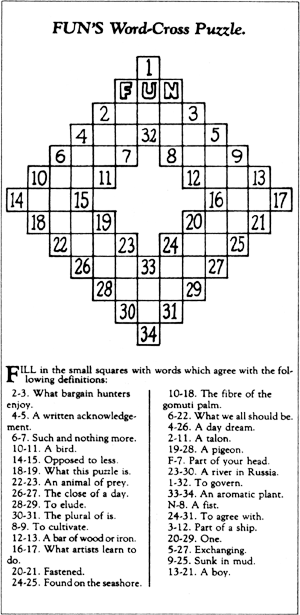
When a publisher decided to compile a series of those "Cross-Word" puzzles into a book later in 1924, it quickly became a bestseller. People from all corners of America would crowd libraries and make themselves word sleuths by bingeing on books that would provide them with hints, or outright answers, to various parts of the Crossword puzzles they were solving. Ironically, New York Times was the last major publisher to offer Crossword puzzles in their issues, even at the time deeming it as a "primitive mental exercise". It was not until 1942, during the height of World War II, that the Times editors realized their readers had become wary of the news at the frontlines and needed a welcoming distraction. Fast forward to 2020, and in a dramatic twist where readers once again found themselves in times of uncertainty, the New York Times Crossword puzzles have become the gold standard, and in a sense, rendered the activity once again as a:

Perhaps that was the reason why I subscribed. It was three months into the lockdown as the world was embattled in another war, this time against a virus, and even revisiting my nightmares from twelve years ago became a pleasurable thought.
--Themes--
Unbeknownst to me at the time, there is a level-of-difficulty system to the New York Times Crosswords embedded into the days of the week. I will get into that later, but here, the very first puzzle that I encountered was a themed puzzle in the Starter Pack, from a Thursday:
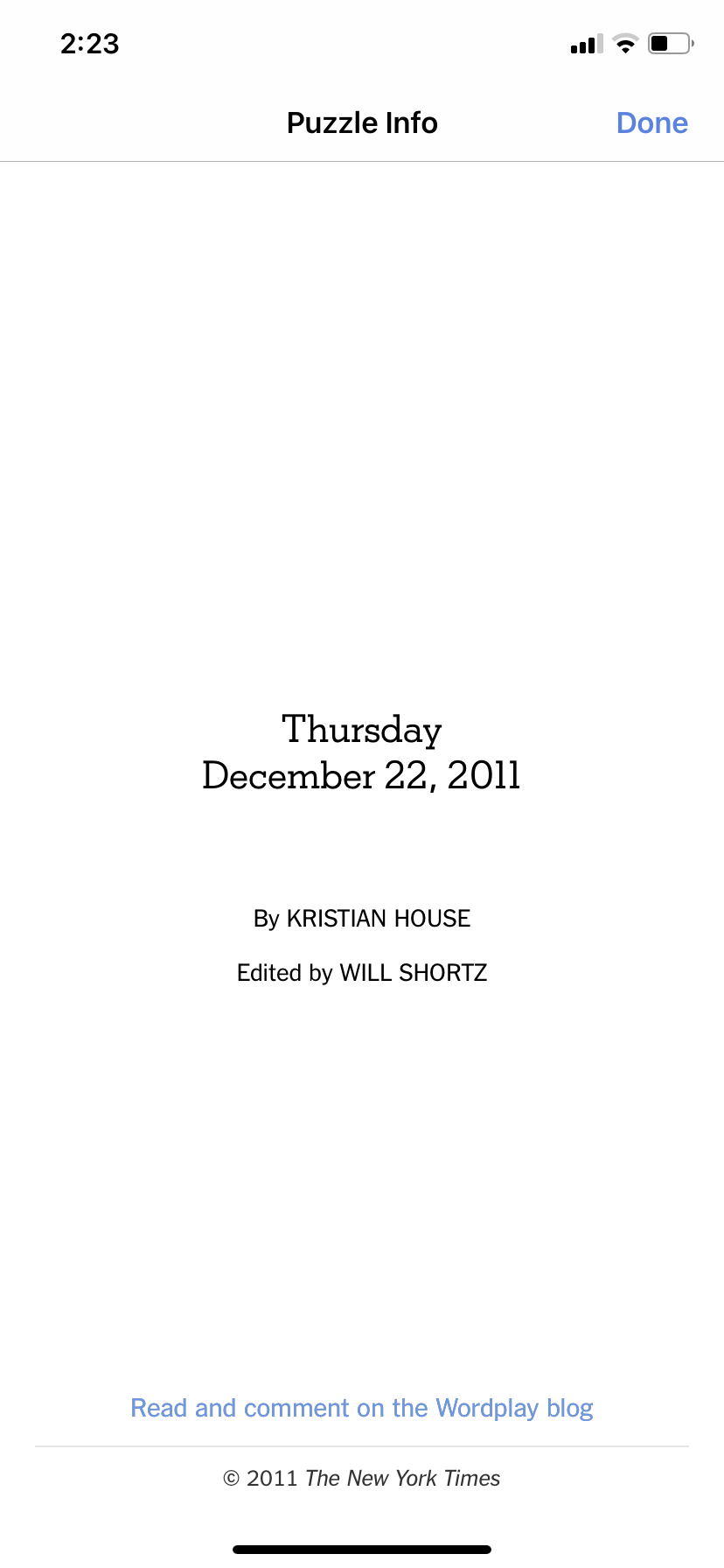
A couple of things: first, there is a moral to my first encounter, and that is ignorance is bliss. It turned out that Thursdays are reserved for the toughest themed puzzles of the week, and had I known this earlier, it would've quelled any curious motives of me attempting the puzzle. However, I was glad I was oblivious to the fact and opened the puzzle anyways. Second, the puzzle was edited by a man named Will Shortz. Remember the name, as I will get back to him later.
Nevertheless, I spent a good half-hour on the puzzle, and solved 50% of it with hints. The theme of the puzzle was quite clever in the end. See if you can spot it:

In Crossword construction, taking things literally is a common method of creating a theme. Here, the author cleverly noted that while a "werewolf" is a "shapeshifter", the word "shapeshifter" can be interpreted literally as the, well, shifter of shapes. What are some of the shapes that you know? Circles, squares, and triangles to name a few. Now look at the highlighted entries. They are: "Arctic Square", "Times Triangle", and "Bermuda Circle". Those things don't make a lot of sense until you considered the shapes found in those entries have been "shifted" from their original positions. The unshifted versions, no doubt, were: "Arctic Circle", "Times Square", and "Bermuda Triangle". After the "shapeshifter"'s mischievous acts, we get a fun set of clues describing the result. For 20-across: "Uncool Eskimo?". Must be some nerdy person living in the Arctic, a.k.a. an "Arctic Square" (insert laugh track here). For 34-across: "Percussion instrument owned by a New York newspaper?" Yep, "Times Triangle" alright. Finally, for 41-across: "Close-knit group at a popular island destination?" Mmm...sounds like "Bermuda Circle"! After solving this crossword puzzle, I realized exploring quirks of the English language can be fun and not so nightmarish after all.
Themes of crossword puzzles come in all shapes (no relation to the previous section) and intricacies. They can be as simple as taking a common word or phrase and interpret the meaning literally, as seen in the entry "body double":

(Mouth.Organ; Rib.Joint; Knuckle.Head; Back.Lash, get it?)
To movie titles:
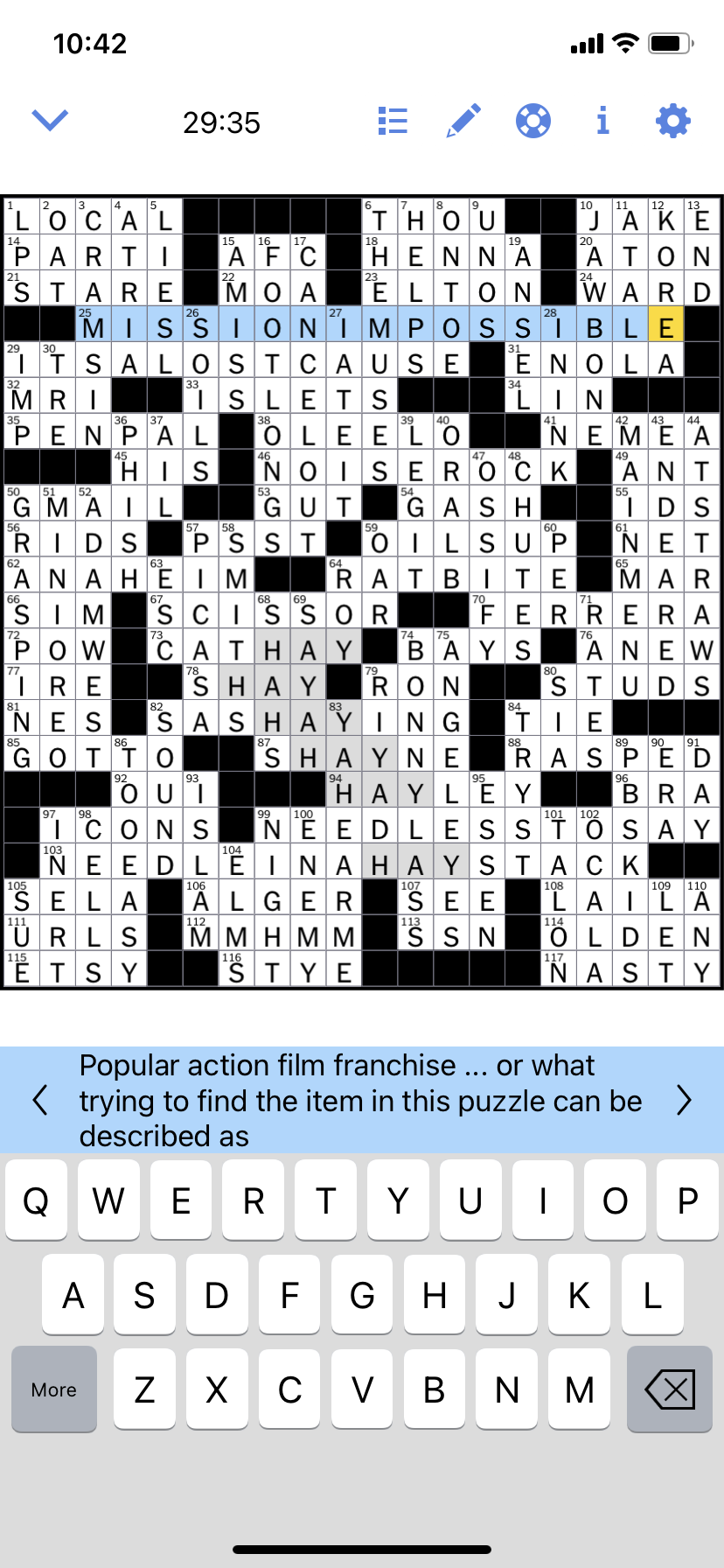
(Finding a needle in the haystack? Truly an impossible mission!)
To funny puns (more on this later!)

(Where did that idea apier (appear)?)
To clever cross-referencing of unexpected fields such as math and economics:
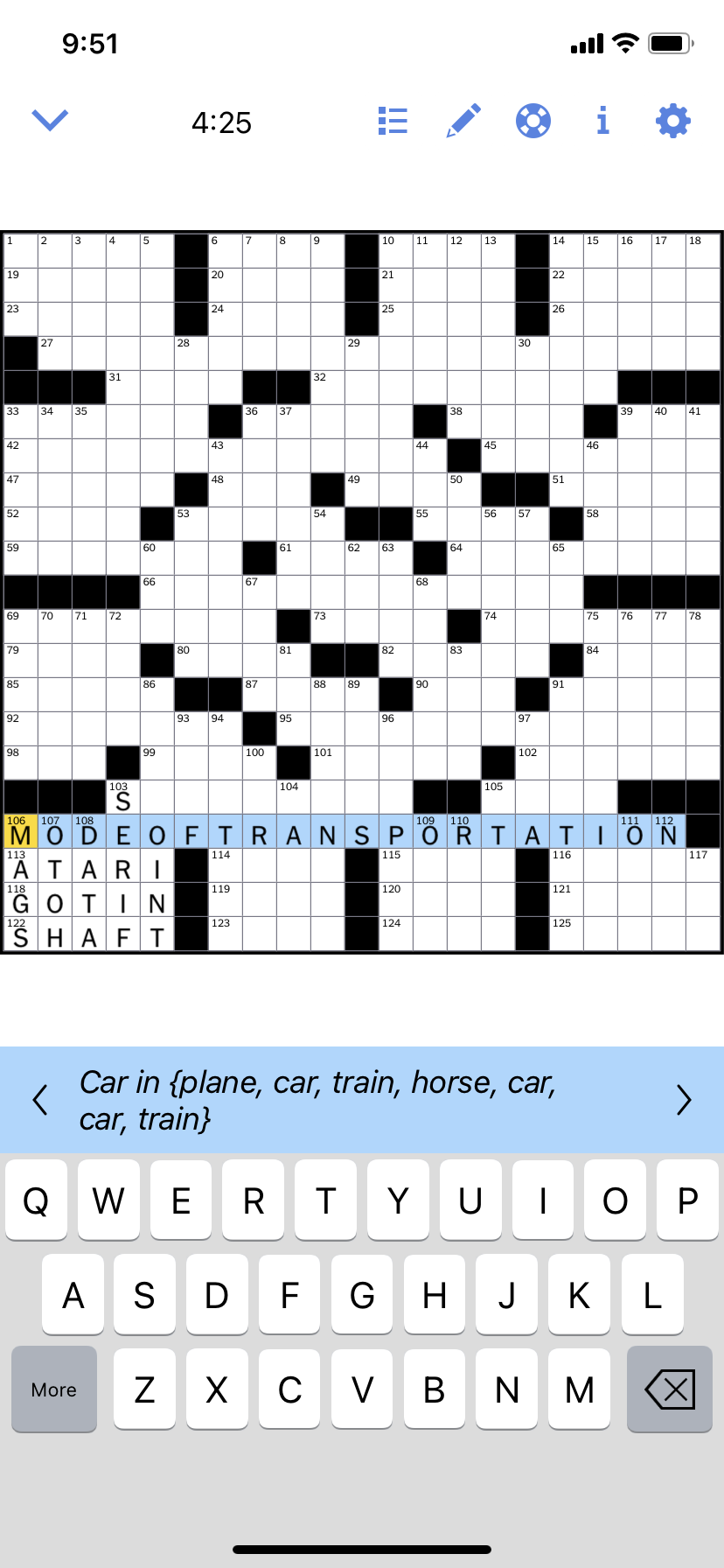


(Adam Smith must be proud!)
To arguably one of my favorites, celebrating Pride Month:

The above construction is visually stunning. You have to trek through the entire puzzle to embrace the full ingenuity of this commemorative crossword, which I highly recommend. The date of this puzzle is June 2, 2021, and the author is Jesse Goldberg. In summary, the above puzzle pays homage to Stonewall Inn, a gay bar in Manhattan that was victim of a police raid in 1969. This was followed by a series of demonstrations in solidarity to the LGBT community. Today, this tavern stands as a symbol for the modern movement of fighting for LGBT rights in the United States and is in fact a U.S. National Historic Landmark.
Taken literally, the central entry "Stonewall" refers to the entries that line the boundaries of the puzzle grid, forming a barricade enclosing the entire puzzle. This "wall" of words corresponds to clues whose answers all end in "stone", hence the literal name making up the theme. For example, 5-across has the clue "Emerald or ruby". Each of them is an example of a birthstone. Hence the entry on the "stone wall" reads "BIRTH".
Needless to say, I've crossed paths with so many crossword puzzles, I even saw my own name on a few occasions!

--Levels of Difficulty--
For New York Times, each day of the week corresponds to a level of difficulty for their crossword puzzles, as well as whether it is themed or themeless (i.e. no themes). A visual depiction of the levels is given below:

Here is where I cue Will Shortz, the legendary editor-in-chief of New York Times Crosswords, who makes the call on whether aspiring constructors can see their work published. There isn't a quantifiable figure that determines the "difficulty" of an NYT crosswords puzzle, yet, having done 1000+ of them to date, I cannot help but admire the consistency in which those levels adhere to their respective days of the week. This is only possible due to Shortz's expertise and insight in making the right calls on those puzzles appearing in issues. For example, Mondays to me were always a breeze, then it always got a little harder on Tuesday, then harder than that on Wednesday, and went diabolical on Thursday. The overall difficulty increases from Monday to Saturday, with Sunday being the day to relax where NYT presents a bigger puzzle in size, but of medium+ difficulty.
If you are wondering why Friday's hard themeless is more difficult to solve than its Thursday's expert themed counterpart, the answer is once again Will Shortz. Before I go further, a little bit of terminology. The entire puzzle's visual construction is called a "grid". Each square making up the "grid" is called, well, a "square". The white squares are where contents are filled (not always a single letter!), and the black ones are spaces in which nothing is to fill them. The series of squares that correspond to a clue is called an "entry". In themed puzzles, select entries are "theme entries" if they are tied directly to the theme of the puzzle, and the rest of them are called "fills". For example, in the "Stonewall" puzzle, the central "Stonewall" entry and the highlighted ones on the edge are "theme entries", while the rest are "fills". In a themeless puzzle, all entries are "fills". Now, if you are thinking about submitting a themeless puzzle as an inside track to get published, think again. For a themeless puzzle, EVERY entry must have a creative clue (as per Will Shortz' standard), whereas for a themed puzzle, Will Shortz might give you a pass on some fills if the theme, which usually only consists of four to five entries, are clever enough.
To elaborate, a creative entry, regardless of theme-ness, usually involves a term in crossword-ology called "misdirection". This is the construction of a clue that most people, if reading it at face value, will completely miss the correct answer. A memorable example for me would be the following clue:
"A child who's lying might make one" (9 squares)
Child. Lying. Seeing those two words together paints the image of a naughty adolescent trying to cover up some impish acts by telling a whooper to his/her parents. Going down this path, however, would lead you astray, as the answer is SNOWANGEL. As in, a child who is LYING down on the ground, say on a snowy day in the park, might make a snow angel. This is misdirection at its finest. In themeless Friday and Saturday puzzles, get ready to see a whole grid of them.
Okay fine. So let's turn down the difficulty a notch, just exactly how crazy can Thursday's themes be?

Um...Remember I said white squares are not always filled with single letters? In the above Thursday themed puzzle that I solved, the key is 27-down: "Strengthen one's commitment", or double down on something. Taken literally, four down entries in that puzzle had duplicate letters in their respective squares, signaling the "double" in the downs. Just as example: 2-down has the clue "Romantic dinners for four, perhaps". Well, perhaps they are double dates...oooh! What's crazy is that the across clues use those double letters. For example, 20-across has the clue "Tractor brand". If it were five squares, DEERE (as in John Deere) would come in mind. However, with only four squares, not grasping the theme in time would strand unfortunate solvers in a lexical quagmire.
--Let's Solve a Puzzle Together--
By now, if you are curious about how I go about solving those puzzles, I will gladly show you. Below is a puzzle that I solved just for this blog post published in March 2020, and it's a Wednesday puzzle that I chose to show you the quirkiness in some of the constructors. I will go through the thought process of solving it and perhaps shed light on some useful strategies that can be employed if you are ever stuck. Please note my standard of "solving" a puzzle is with no help whatsoever. That is, no Wikipedia, Google, or dictionaries.
Let's Begin!

When you are staring at a blank grid, it's always helpful to start with unambiguous clues. Fill-in-the-blank ones are just that.
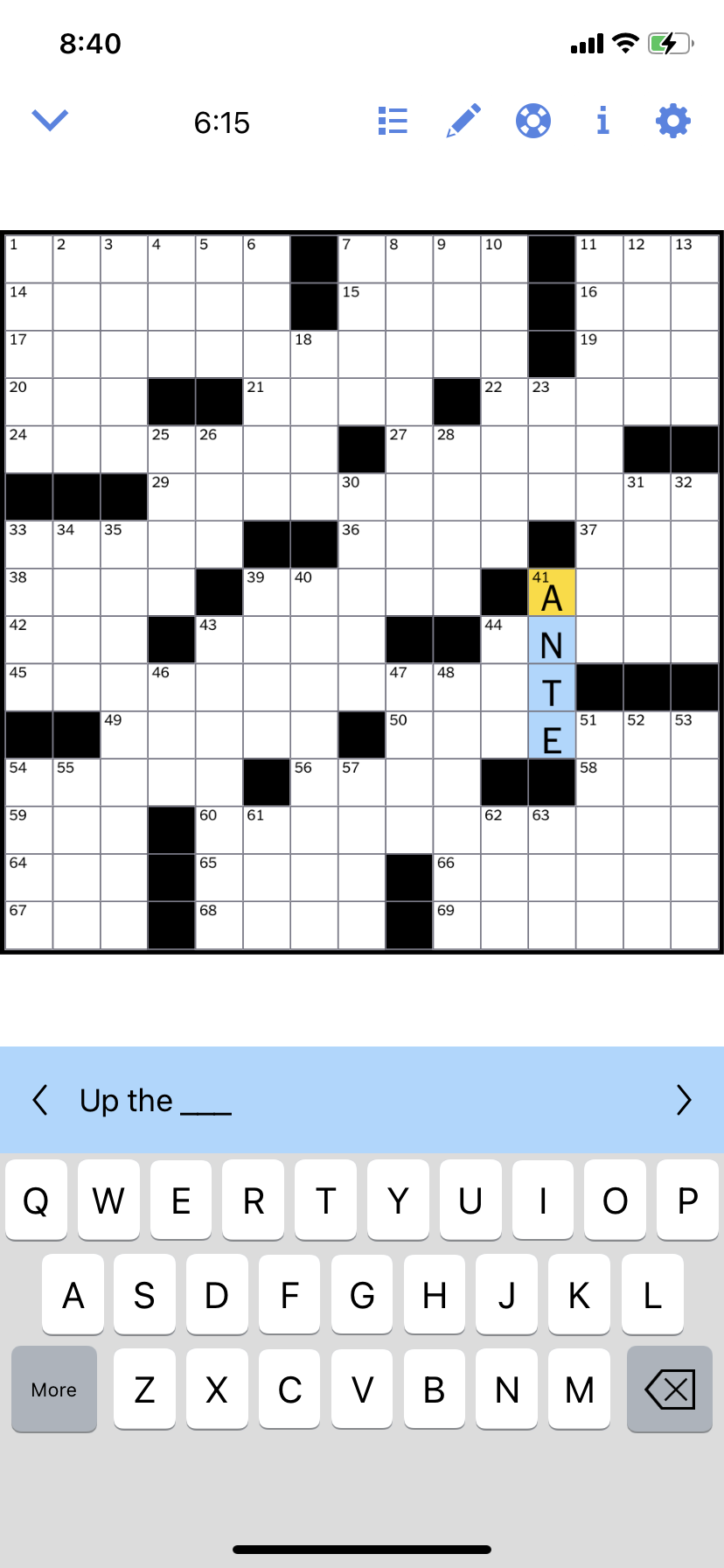
Or, having pop culture knowledge doesn't hurt either:

Keeping peeling away at the fills:
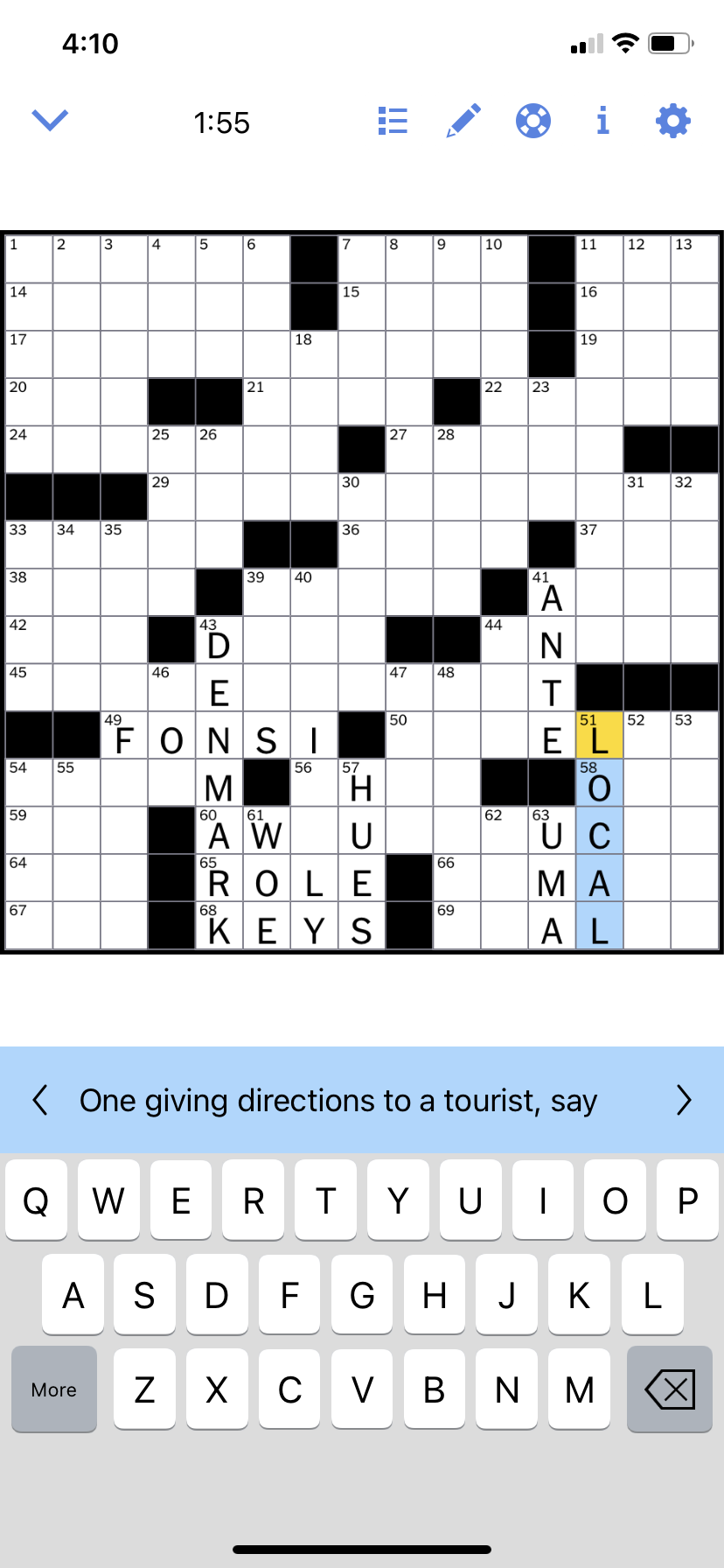
Now we arrive at the first themed entry with some squares filled. The themed entries are usually the longest ones in the grid. The theme of the day appears to be puns.
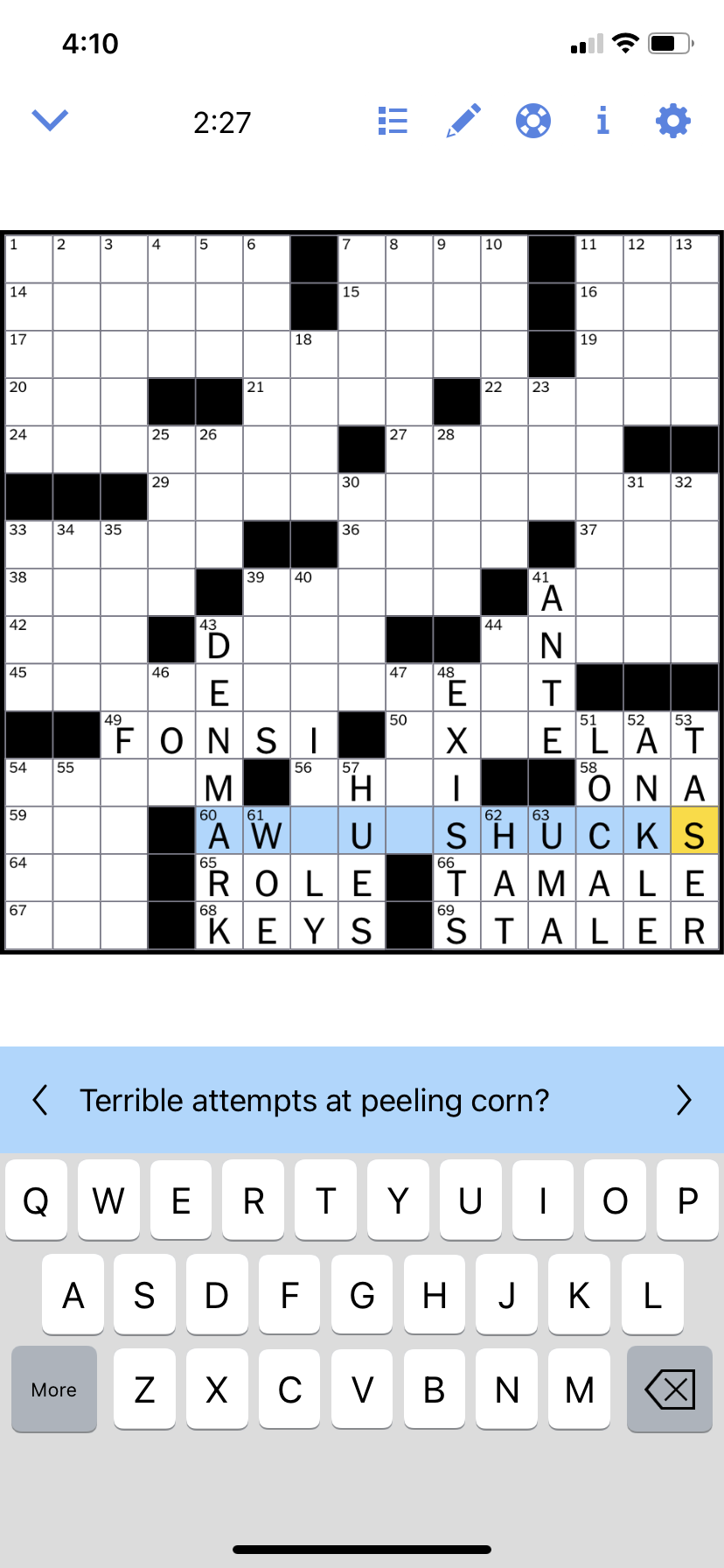
The first pun entry is always the hardest, because you would not know exactly is the constructor going with the theme. The best bet here is to solve it using the clue given and re-read the entry. Maybe it will shed some light:

One of the best moments in solving a themed crossword puzzle is the epiphany. That is the moment where you go "aha!" as you figure out the theme. Here, while "Awful Shucks" don't make a lot of sense (though it does perfectly describe terrible attempts at peeling (shucking) corn), we realize that the affix "-ful" was added to "Aw". The original phrase was "Aw Shucks!", so the theme is adding "-ful" to common phrases to make new, punnier ones.
We keep going:


If you have doubts about the theme, 45-across should erase them altogether, as the clue reads, "Exam in an interior design class?". "Tasteful Test" describes it and is a punnier version of "Taste Test" with "-ful" added to the first word. Well played!
Below is a tricky fill. Inferno anyone?
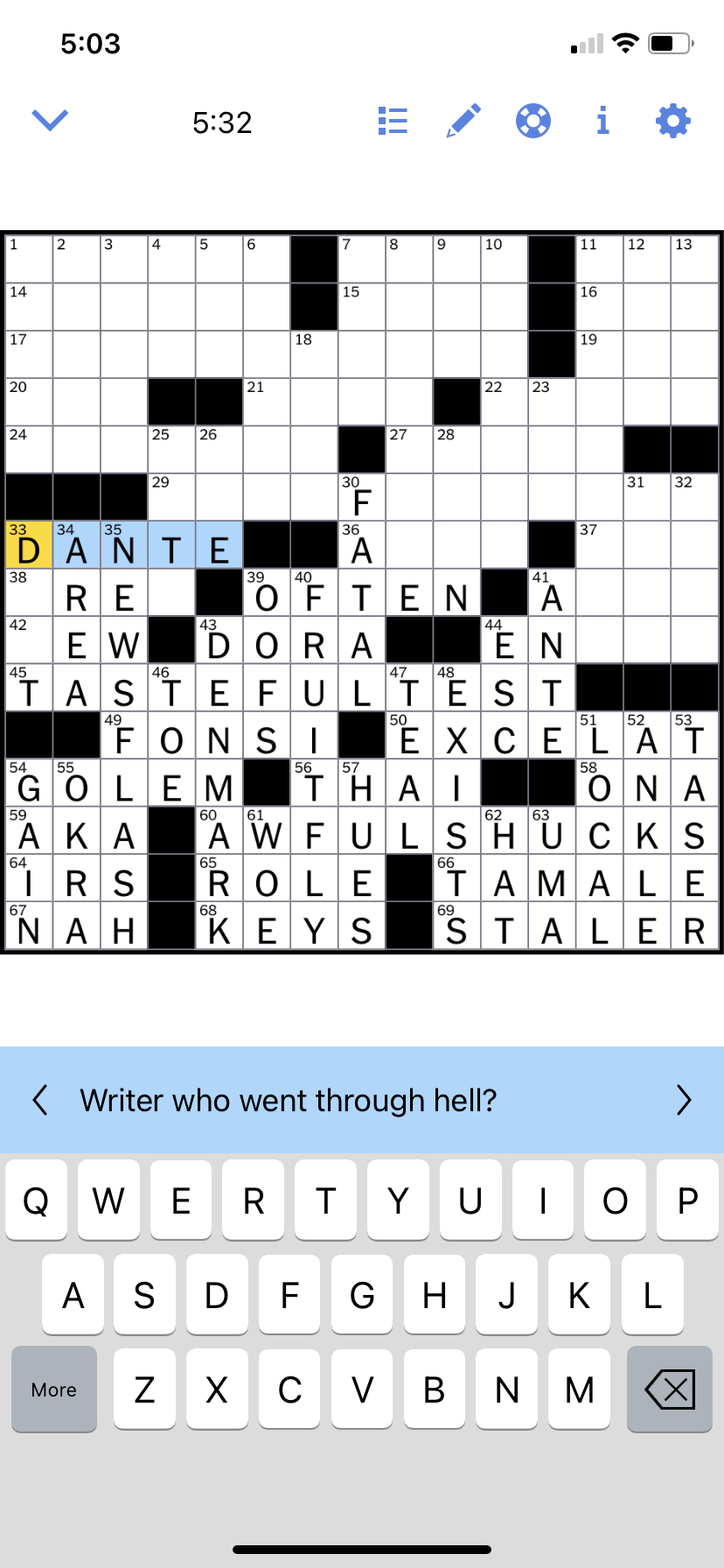
Half way done! We keep going:


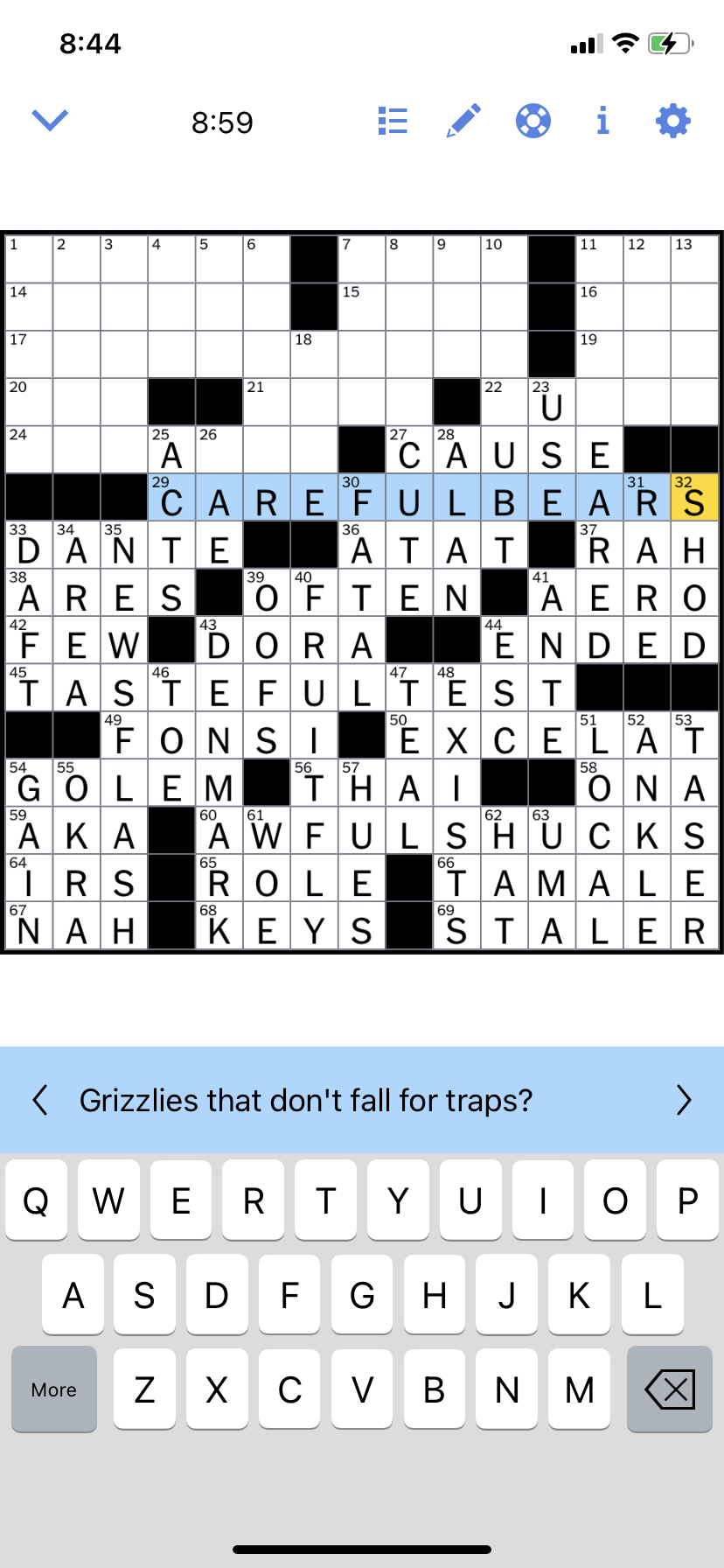
Aha! Another themed entry. "Carebears" became "Careful Bears" after artfully avoiding traps.
Only a quarter left!
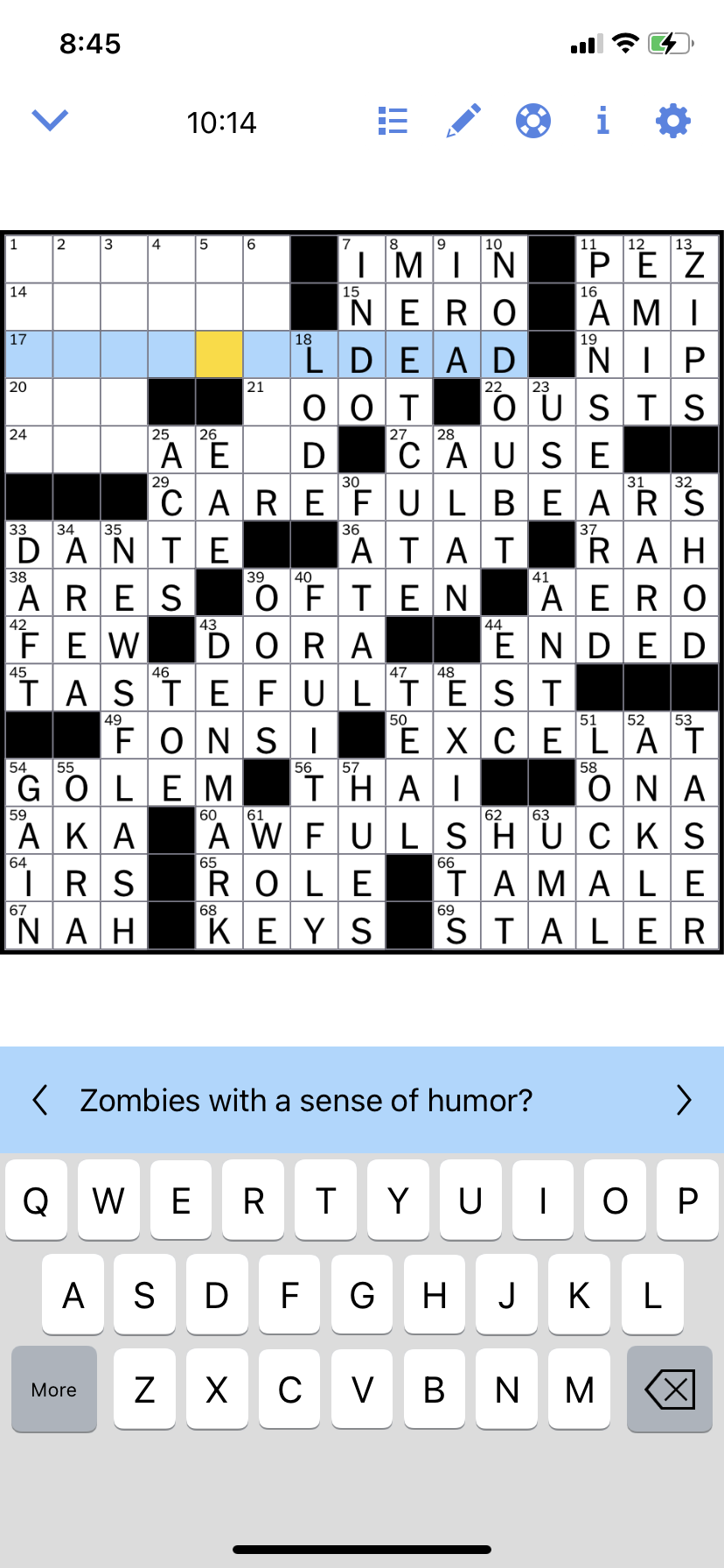

Here is a useful strategy. For 17-across, here I was not sure of the answer, but I know the highlighted square is an "F" and the one next to it is a "U". Why? Because I already knew the theme. Since the second word in the entry is "DEAD", makes sense as the clue is talking about zombies, the three letters preceding "DEAD" must be "FUL", the affix added to the first word of a common phrase.
In crossword puzzles, every square can turn the tide, so you don't have to wait for an entry to be solved. If a puzzle is themed, use the theme to your advantage. It would turn out that the actual entry is "Playful Dead", which is punned upon "Play Dead" for an elfin zombie.
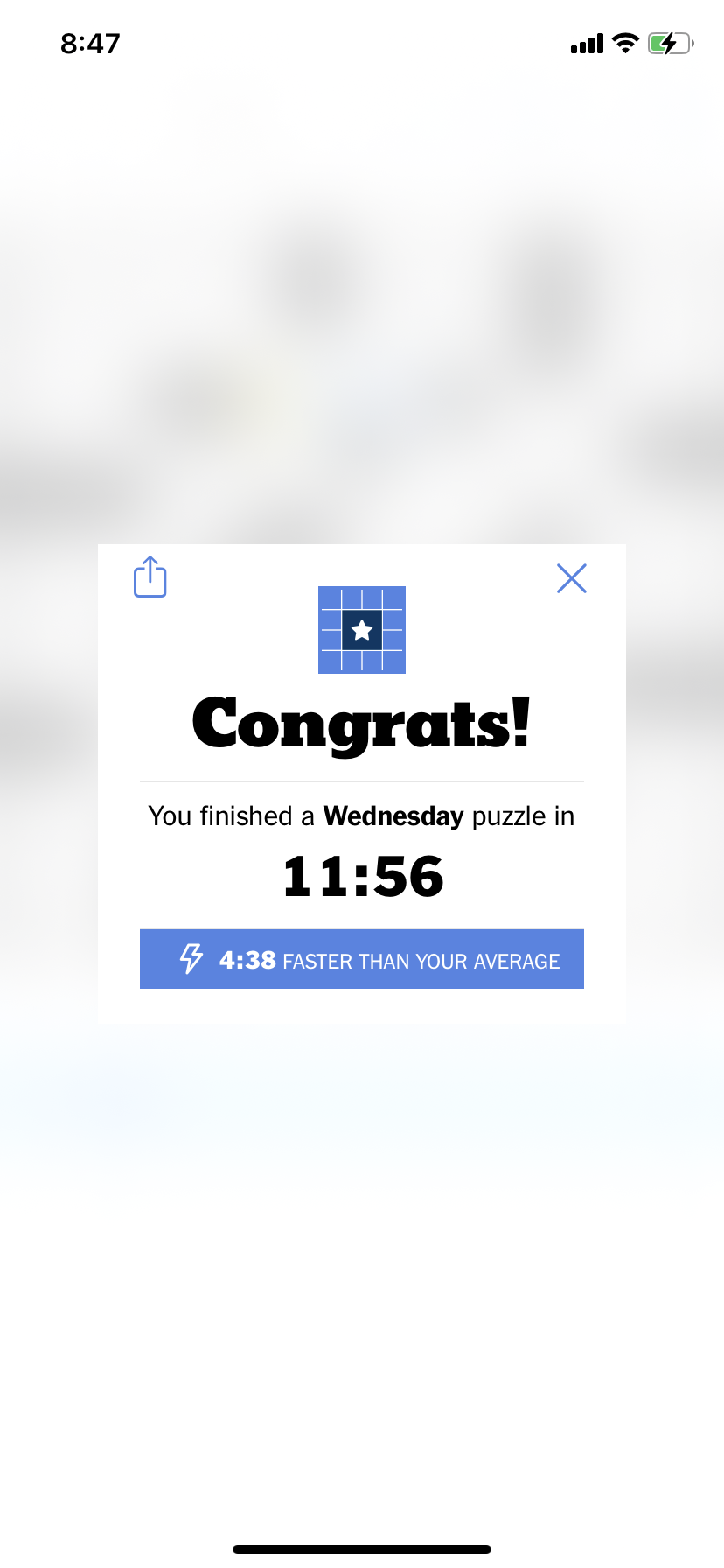
Et Voila! We solved the puzzle! The time is not too bad either, for a Wednesday!


--One Year Later--
Ever since I started solving New York Times Crosswords, I have awed at the creativity of those puzzles and learned knowledge I would never even thought of absorbing before. Though it was nearly impossible to solve even an entry for a Monday puzzle when I first started, through perseverance and my general intrigue at the creative juices of all the wonderful puzzle constructors held at the highest standards by Will Shortz, I have solved even Saturday puzzles now. For comparison, that was then (June 2020):
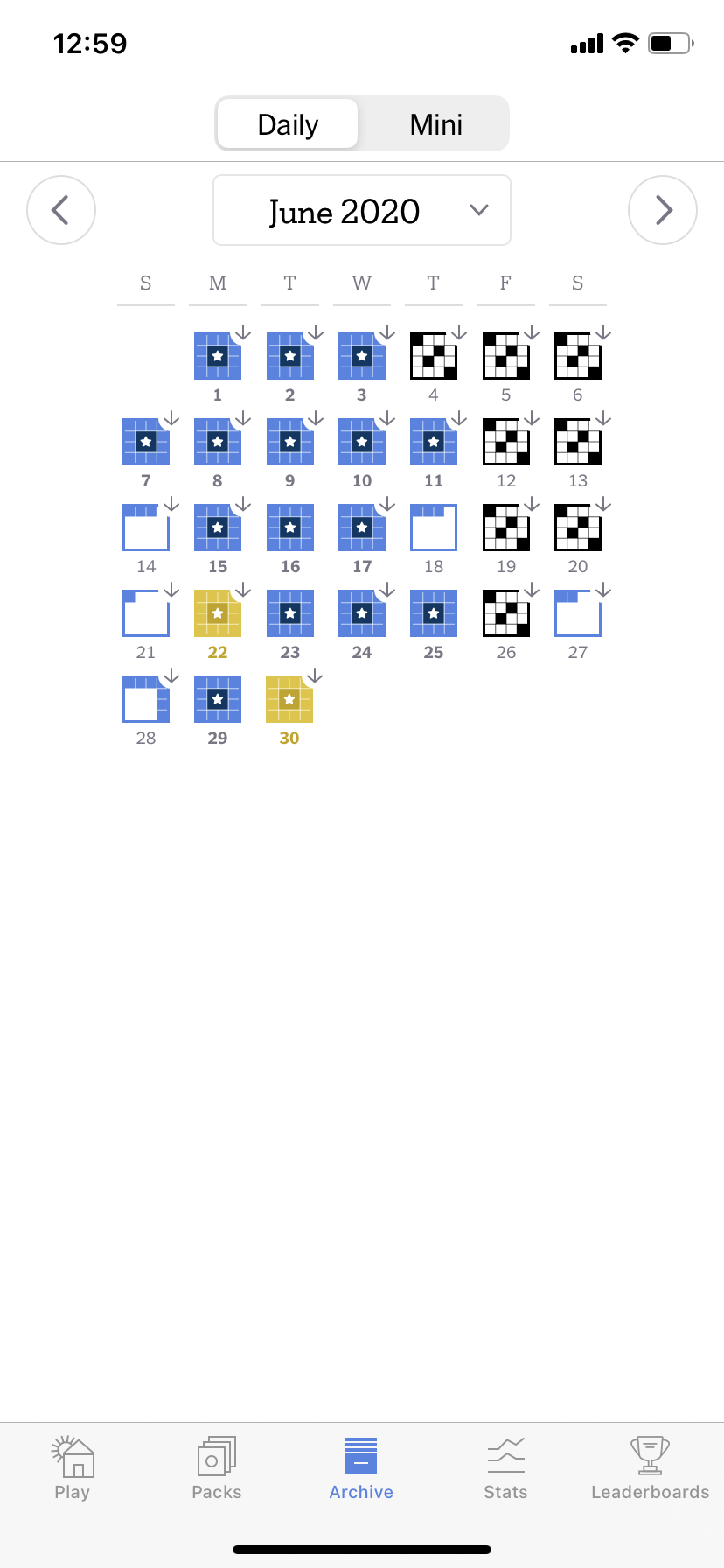
(Only the gold puzzles are ones that I solved with no help or hints. Please note once I subscribed, I have access to all of the archived puzzles published by NYT.)
And this is now (June 2021):
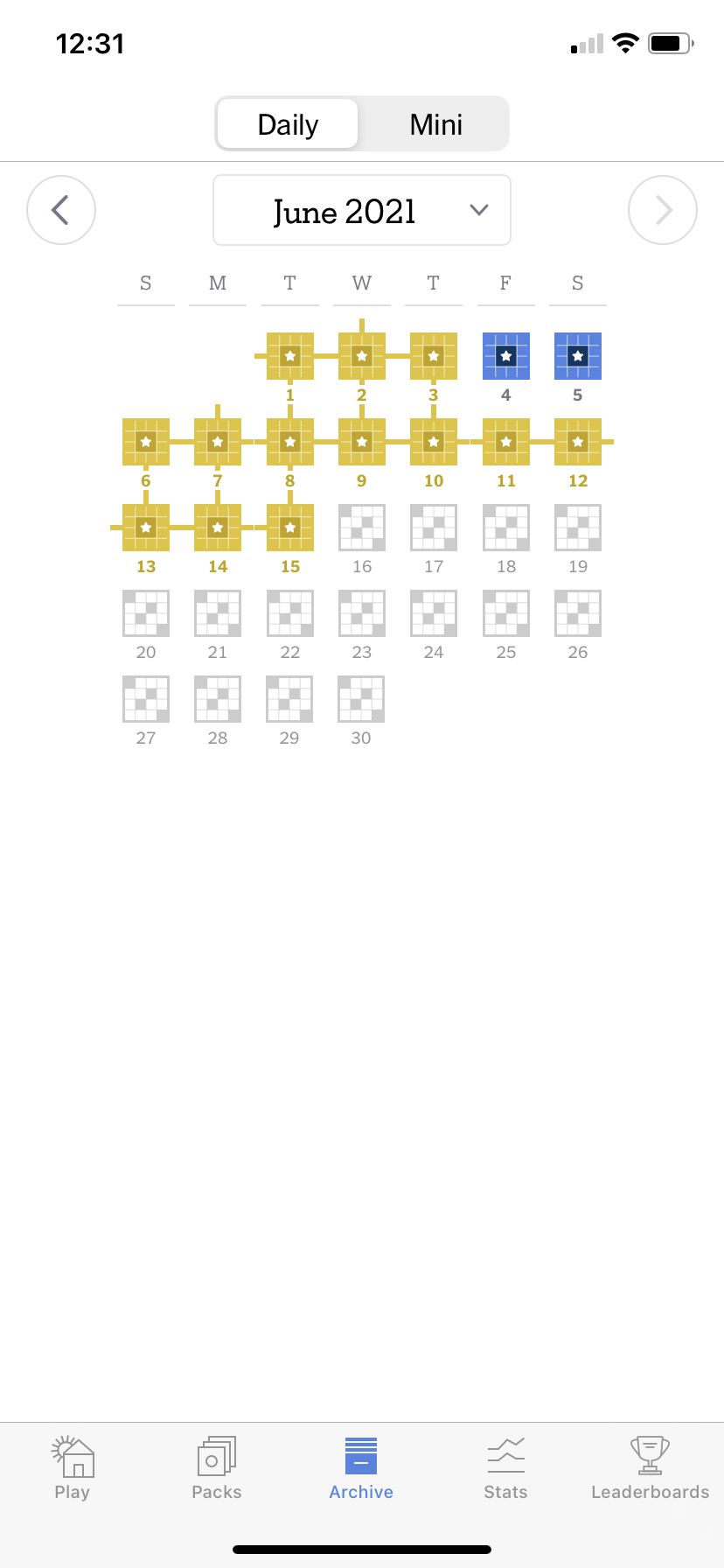
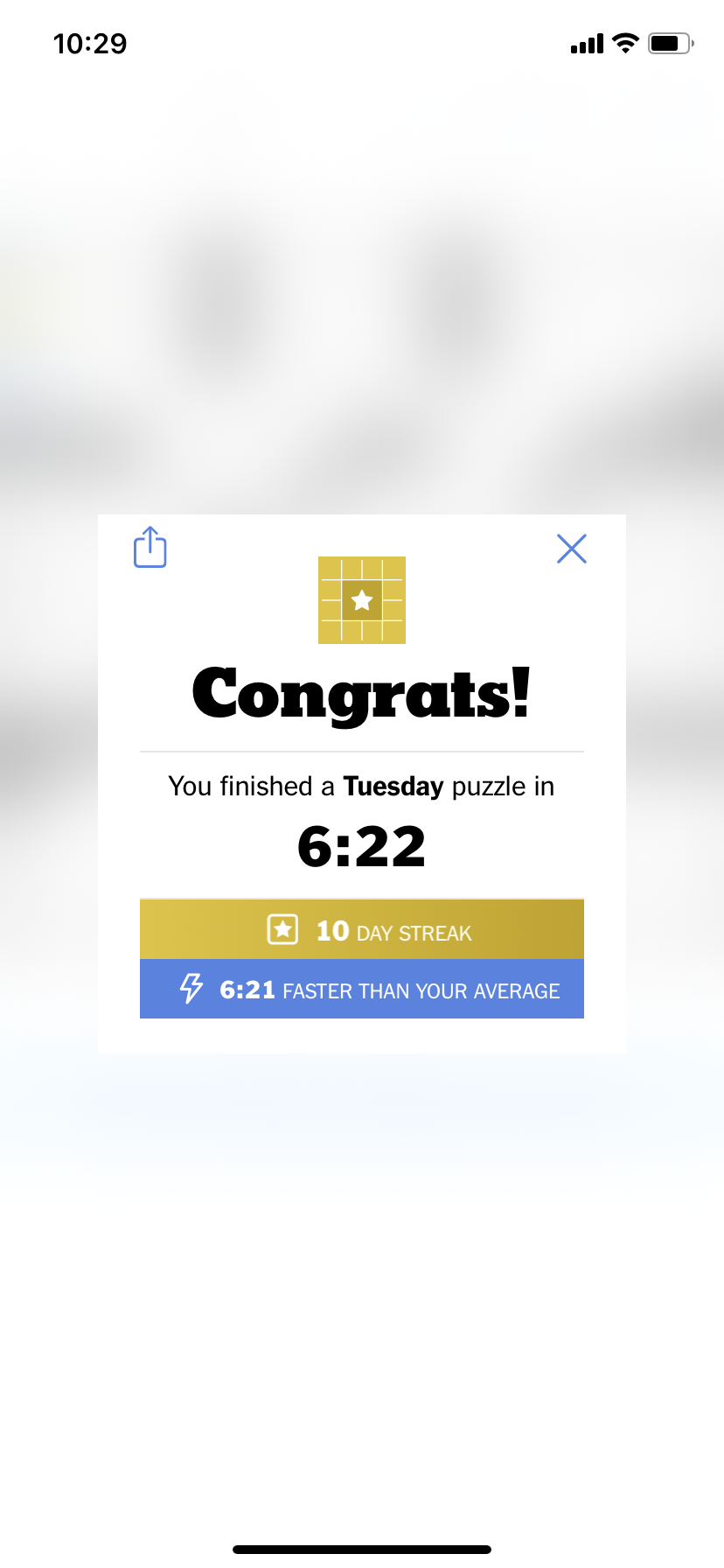
This is the story of how I crossed crosswords.
***
As a point of interest, there was even a documentary called Wordplay directed by Patrick Creadon in 2006 highlighting the growing interest in Crosswords among the general populace, drawing attentions to noted enthusiasts such as Jon Stewart and Bill Clinton. Check it out! Trailer below: